By Emmanuel Daraloye | 22 November 2022
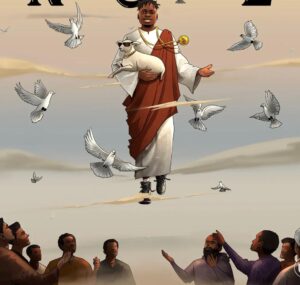
Growing up in Lagos has always carried a certain raw inspiration, and Pain captures that essence vividly. The familiar “grass to grace” narrative may not be new, but it is rarely told with this level of honesty and shared purpose.
On Pain (remix) , Orex takes the lead, and this time with conviction, grabbing his pen to paint a picture of struggle, resilience, and survival in Lagos. He shares this canvas with Dee Wayne, Corizo, and Otega, while Nelson Fasadeju serves as both producer and songwriter. Together, the five artists contribute to a reflective piece that leans heavily on storytelling and somehow almost completely leaving out commercial appeal.
After listening to the song on repeat for about ten times this week, Pain (remix) feels like real-life art and lived experiences. It is the kind of song that speaks directly to hustlers, motivating them to push harder while reminding them they are not alone in their struggles to be successful.
Just at approximately four minutes and thirty seconds, the song allows each of the talents the space they need to express themselves, however, from a critical standpoint, the song’s production choices raise mixed reactions as the instrumental opens softly, dominated by piano and guitar for the first 40 seconds, with no kicks or percussion. While this creates an emotional and reflective mood, it could also be perceived as a missed opportunity by the producer. The absence of rhythmic elements at the start makes the song sounds and feel overly conventional and not made for the Nigerian market, which feels like listening to a pop ballad by Ed Sheeran or Celine Dion rather than an Afro hip hop record.
As the song continues and kicks are eventually introduced, the beat still feels somewhat flat. There is little to no distinction between the song’s hook and Dee Wayne’s verse, it is just the similar snare and beat patterns running through both sections of the song. In contemporary Afrobeats or Afro hip hop, listeners often expect clearer separation between verses, hooks, and choruses, this is usually either through instrumentation, tempo, or mood shifts. Here, the production remains largely uniform.
Nelson Fasadeju’s work as producer and co-songwriter plays a major role in shaping the sound of “Pain (remix)”, even in the parts that have caused debate. He chose to build the song around soft piano chords, simple snares, and slow rhythm changes, showing that his main focus was on telling the story clearly rather than making a loud, commercial afro beat sound. This simple style gives space for the lyrics, especially the rap verses, to be heard clearly. However, it also makes the production easy to criticise for not having enough variation or strong energy, which many people expect from Afro hip hop.
Nelson Fasadeju’s careful use of kicks, especially during Otega’s verse and the long outro towards the end of the song, shows that he was aiming for a controlled and almost movie-like build-up instead of the usual beat drops. This choice can be seen as strong artistic control, but also as a missed chance to push the song further. Overall, it presents him as a producer who is ready to go against the popular sound and what is normal in the industry, even if it divides listeners.
Corizo’s entry stands out immediately. Coming right after Dee Wayne’s 16 bars, he launches into a tight, bar-for-bar rap verse filled with wordplay and confidence. He has a sharp delivery and the flow is engaging, even though the verse lasts just about 15 seconds. Unfortunately, the production remains unchanged, its still the soft piano, light snares, and minimal kicks, which slightly undermines the hip-hop energy his verse demands.
That said, this same minimalism can also be viewed as an advantage. The lack of heavy beat switches allows listeners to focus on lyrics, rhyme schemes, and punchlines. Still, given Nelson Fasadeju’s caliber as a producer, expectations for more dynamic arrangements are reasonable.
The same light instrumental continues into Otega’s verse. He opens with his signature “Otega Jogbo!”, instantly signaling to fans that something special is coming. Interestingly, this is where the production finally begins to evolve. Otega’sverse features more pronounced kicks, subtle breaks, and intentional pauses that add emotional clarity to his delivery. There are also more vocal backups, some of which are by Nelson Fasadeju himself, to enhance the intensity of the moment.
This shift has led some listeners to speculate about favouritism in production. From multiple listens, one could argue that Otega’s verse carries the song. This sentiment is echoed by a fan comment on X (formerly Twitter): “Otega verse suppose start that song.” Placing such an engaging verse earlier, maybe somewhere around the 2:50 mark might have helped retain listener attention more effectively.
After the final verse, the song continues for another 40 seconds with Nelson Fasadeju experimenting with kicks, piano, and emotional background vocals. This outro raises questions: Is it purely artistic expression? An intentional break from convention? Or simply excess? The answers remain open to interpretation.
Even with its clear production flaws, The song “Pain” remains a solid record. The rap verses and vocal performances successfully paint a vivid picture of a Lagos boy’s journey from struggle to success. The emotions feel real, the stories relatable, and the message clear.
While the song may not fit neatly into mainstream Afro–hip hop expectations, its sincerity and artistic intent make it worth listening to, especially for those who value storytelling over trends. The song appears to shine in its own lane and dimension. Could this be the revolution of afro hip hop? I guess a more creative direction like this would give a hint of the answer and it is also a conversation worth having.
Share On:
TAGS: “Pain”: A Story of Lagos Hustle Told Through Music
CLICK HERE TO PROMOTE YOUR MUSIC/VIDEO